

Dear North Central Washington Healthcare Partners,
In anticipation of an early start to respiratory illness season, we want to share resources and guidance to use in the coming months to keep your patients, staff, and communities safe. We are using the same regional methodology for respiratory illness surveillance and response as in previous years, with continued appreciation for input and novel approaches from our partners.
Respiratory Illness Resources
We are again utilizing the WA DOH Respiratory Illness Dashboard¹ along with data provided by epidemiologists within our own Local Health Jurisdictions. This data enables us all to stay up to date on respiratory illness trends and transmission risk as the season progresses. We found benefit in tracking Acute Respiratory Illness (ARI) as a new measure last year. This “all-cause” respiratory metric captures symptomatic respiratory illness more broadly than just COVID-19/influenza/RSV measures alone and can be a more reliable indicator for seasonal surveillance. We will continue to track and report on all four measures throughout this year.
Respiratory Season Thresholds
Similar to past years, we will adopt Respiratory Season Thresholds that signify the start and stop of respiratory illness season. Our epidemiologists this year have been able to draw data from the previous three years to create Region-7 specific thresholds, which differ slightly from state-level thresholds. The following are our 2026-2027 Respiratory Season Thresholds, derived from Region 7 data, and applied to our local resources:
| Acute Respiratory Illness Threshold | 14.5% of ED visits |
| Respiratory Syncytial Virus Threshold | 0.5% of ED visits |
| Influenza Virus Threshold | 1.5% of ED visits |
| COVID-19 Threshold | 1.1% of ED visits |
Respiratory Season Recommendations
Similarly to previous years, we recommend the following principles of infection prevention for the respiratory virus season:
- All staff should remain up-to-date on vaccines for prevention of respiratory illnesses;
- All staff should not come to work when experiencing symptoms of respiratory illness (generally, at least 3 days need to pass since symptom onset before returning to healthcare work, as discussed separately, below);
- All staff should maintain strict adherence to appropriate personal protective equipment (PPE) based on symptoms and diagnoses, including standard, contact, enteric, droplet, and airborne precautions;
- All staff should continue to perform handwashing/sanitizing before and after all patient encounters;
- Throughout the season, organizations should strengthen the screening of entrants to facilities for symptoms of respiratory illness and respond with appropriate facility-based triage (patients) or exclusion (visitors or staff);
- Anyone (staff, visitor, employee) with respiratory symptoms should avoid the healthcare setting, but if present for care or unavoidable reasons, should always wear at least a surgical facemask;
- All staff should continue to use N-95 respirators when providing care to patients with respiratory symptoms;
- All persons, but especially healthcare workers, should continue to wear surgical masks or N-95 respirators upon return to work after a respiratory infection, for 10 days from the onset of their symptoms (even when no longer symptomatic);
- All staff should continue to wear surgical masks or N-95 respirators throughout facilities that are experiencing an outbreak of COVID-19 or other respiratory viruses;
- When virus activity thresholds are reached, all staff, patients, and visitors should use facemasks or N-95 respirators for source control in all patient care areas. The “patient care areas” definition should be determined by each healthcare institution.
Please reference current recommendations² and associated FAQ³ from the WA Department of Health on Healthcare Personnel (HCP) Return To Work following Acute Respiratory Illness. HCP are advised to:
Remain out of work with suspicion of any respiratory illness (two or more defining symptoms) until:
- Three days have passed since symptoms onset
- BOTH have been true for at least 24 hours:
- Fever-free without the use of fever-reducing medications
- Symptoms are improving and the HCP feels well enough to work
Wear an N-95 respirator or surgical mask for source control for 10 days after symptom onset, even if symptoms resolve.
It is important to remember that in healthcare facilities, we welcome and care for individuals with higher risk of life-threatening complications from respiratory viruses, and that it is our responsibility to ensure that we create a safe environment for them. We also recognize that staff are vulnerable to infection and that staff members appropriately stay home when they, themselves, are sick. Preventing transmission of illness in the workplace keeps our employees healthy and maintains our capacity to serve the public.
We recognize that many healthcare systems monitor their own respiratory illness data. We support those who have more detailed and facility-specific plans to reduce transmission of respiratory illnesses and will continue to learn from their leadership.
Please reach out to your respective Local Health Jurisdictions for more resources and with questions, concerns and further discussion.
Grant County Health District Chelan-Douglas Health District
Kittitas County Public Health Okanogan County Public Health District
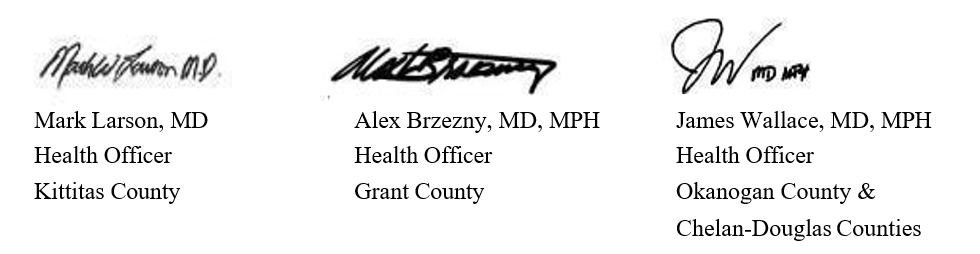
In health, happiness and best wishes for this respiratory illness season,
Referenced Links
- https://doh.wa.gov/data-and-statistical-reports/diseases-and-chronic-conditions/communicable-disease-surveillance-data/respiratory-illness-data-dashboard
- https://doh.wa.gov/sites/default/files/2025-10/420673-HCP-RTW AVRIRecommendations.pdf
- https://doh.wa.gov/sites/default/files/2025-10/420681-HCP-RTW-AVRIGuidanceFAQ.pdf